The Lost Village Research
Jeju Island, South Korea
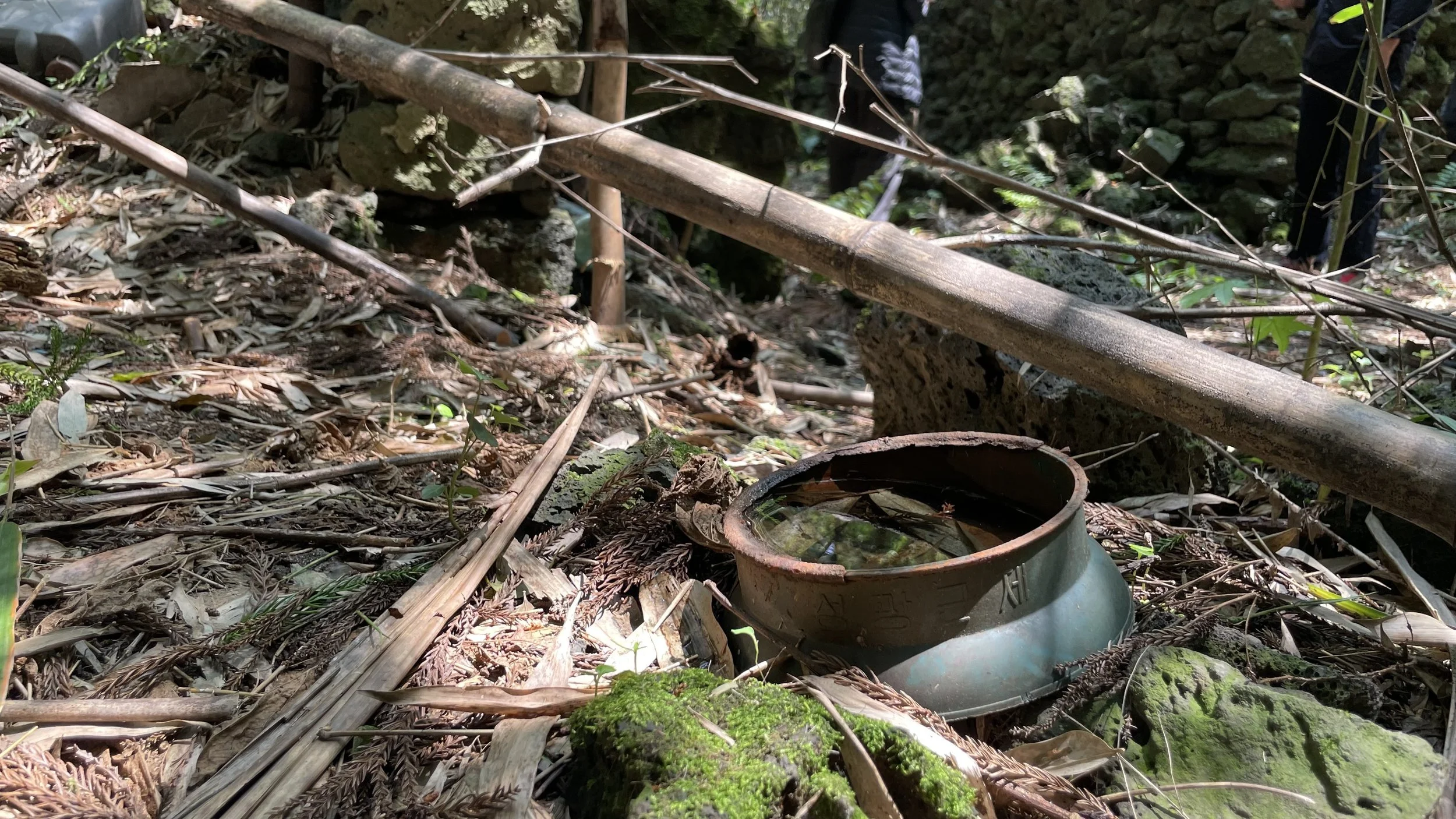
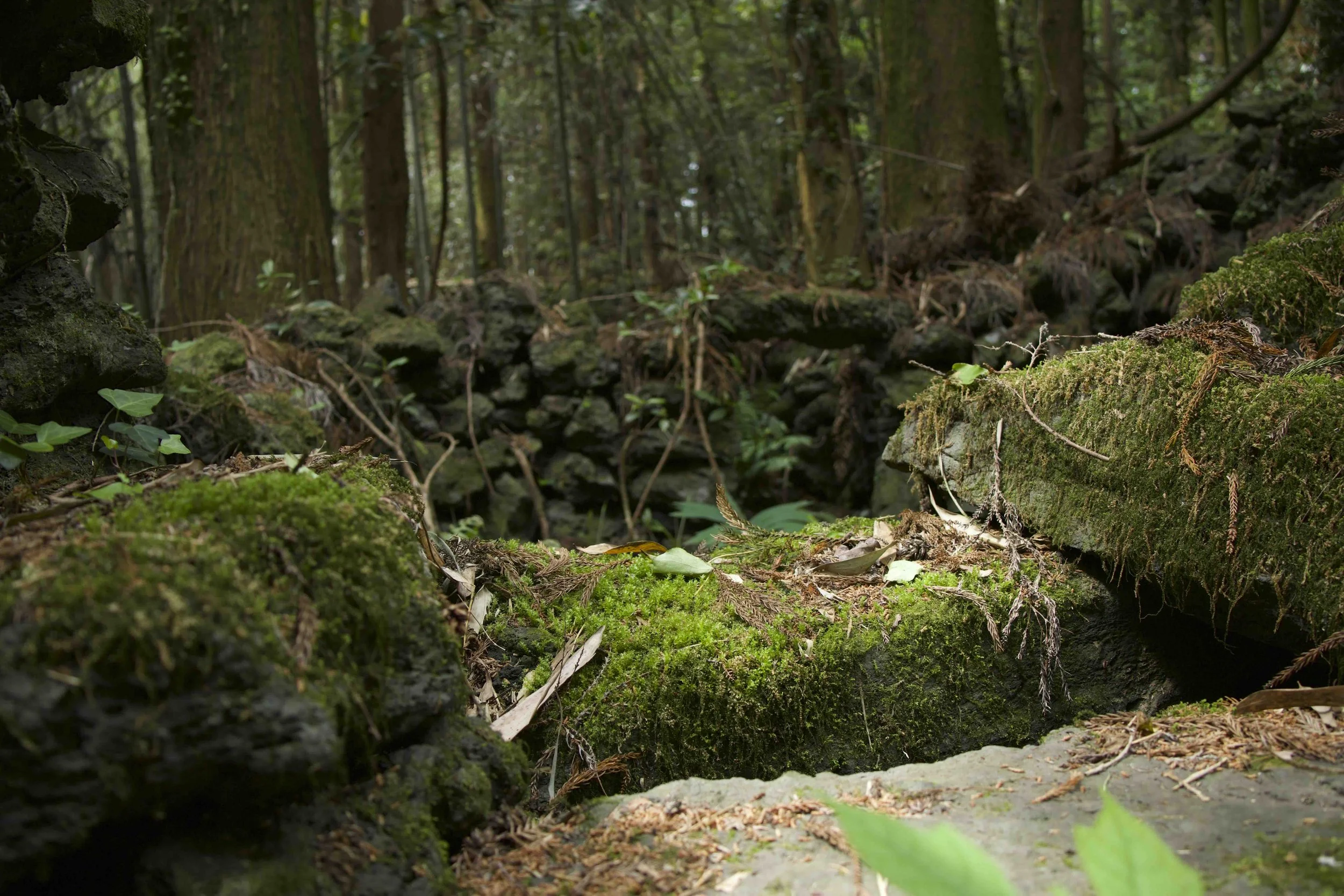
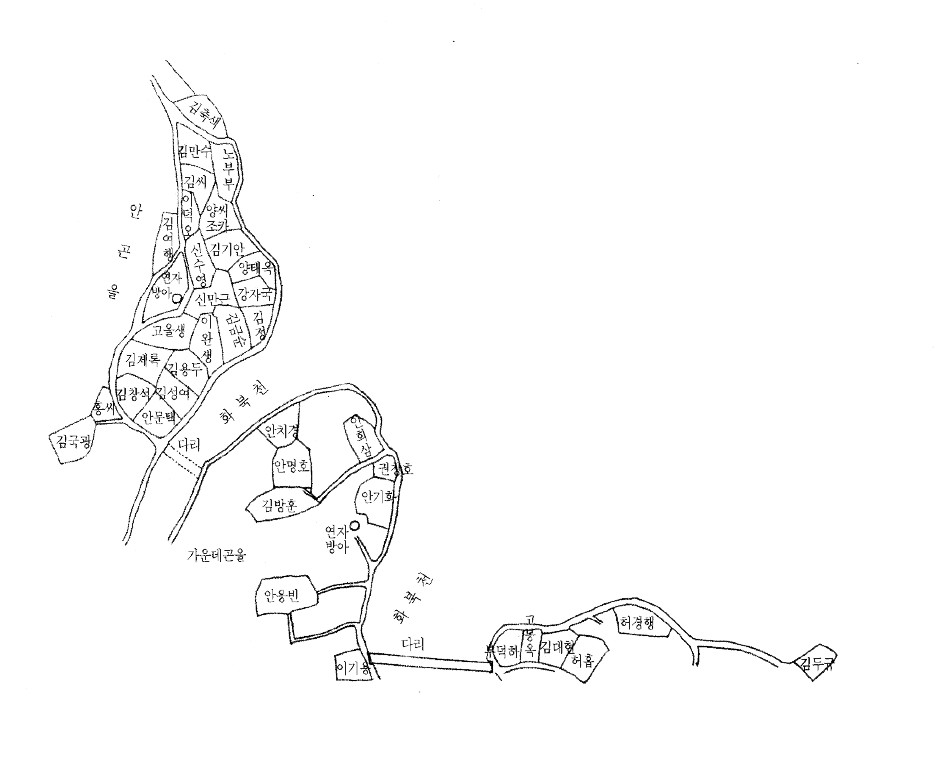
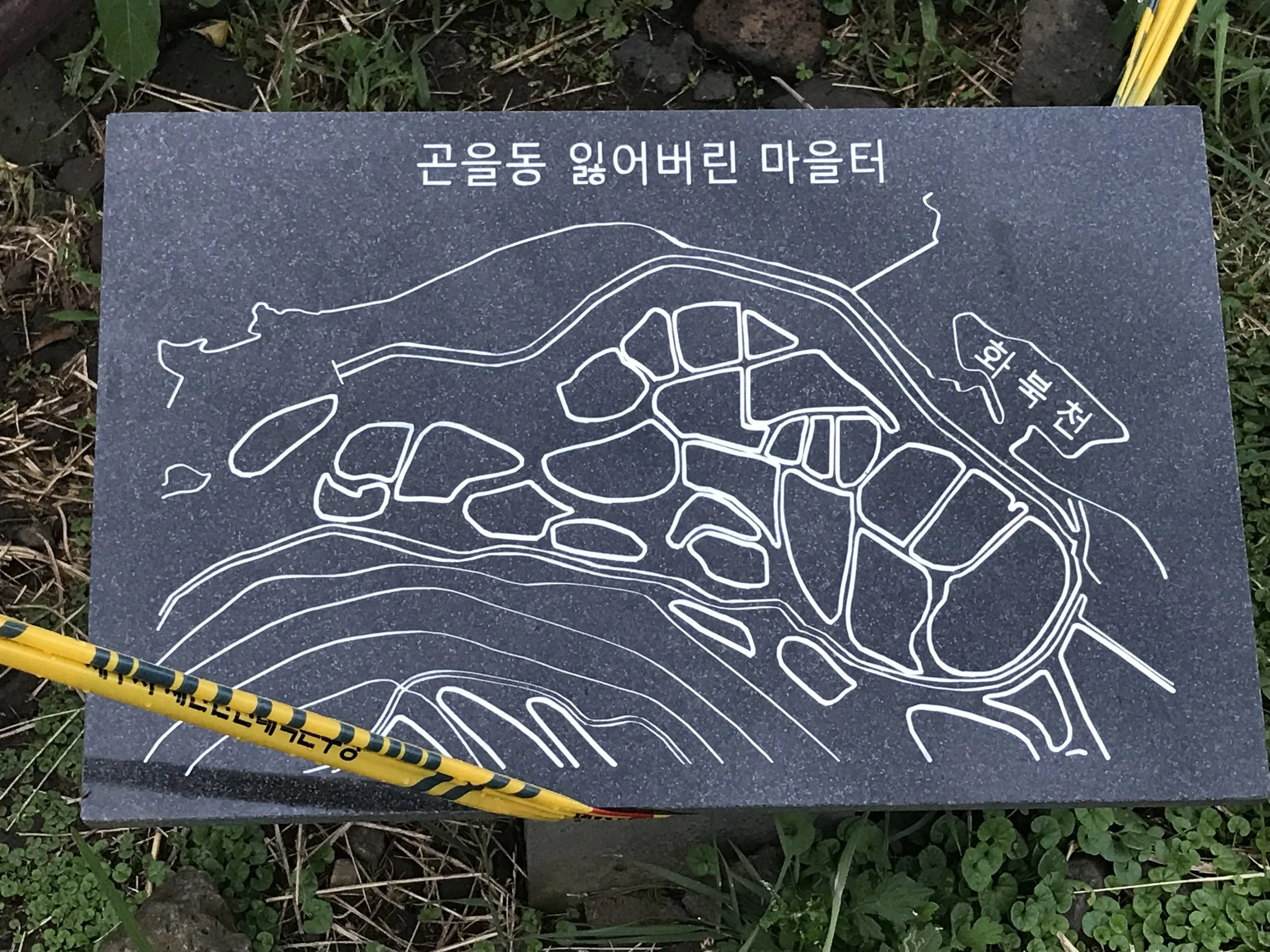
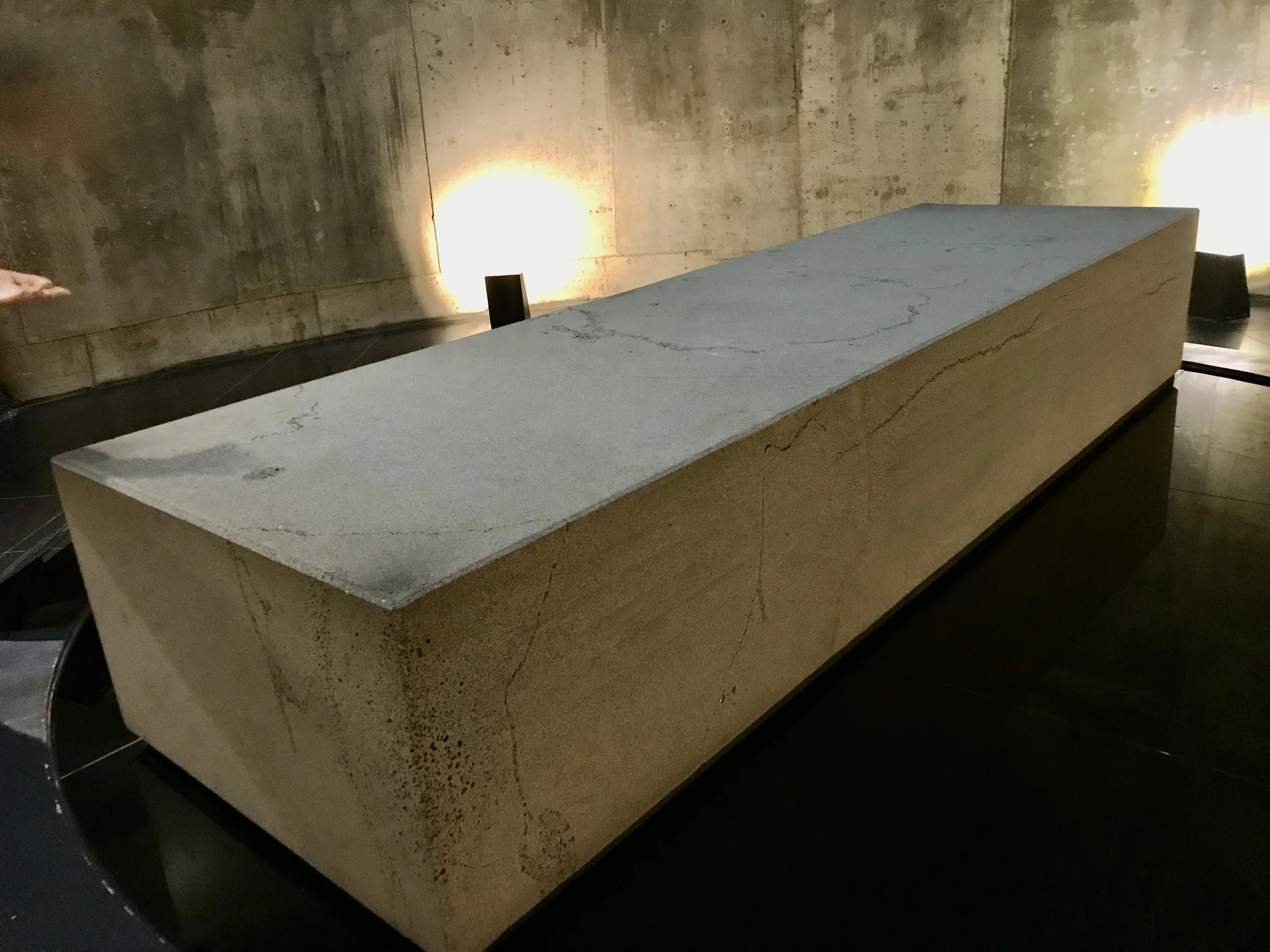
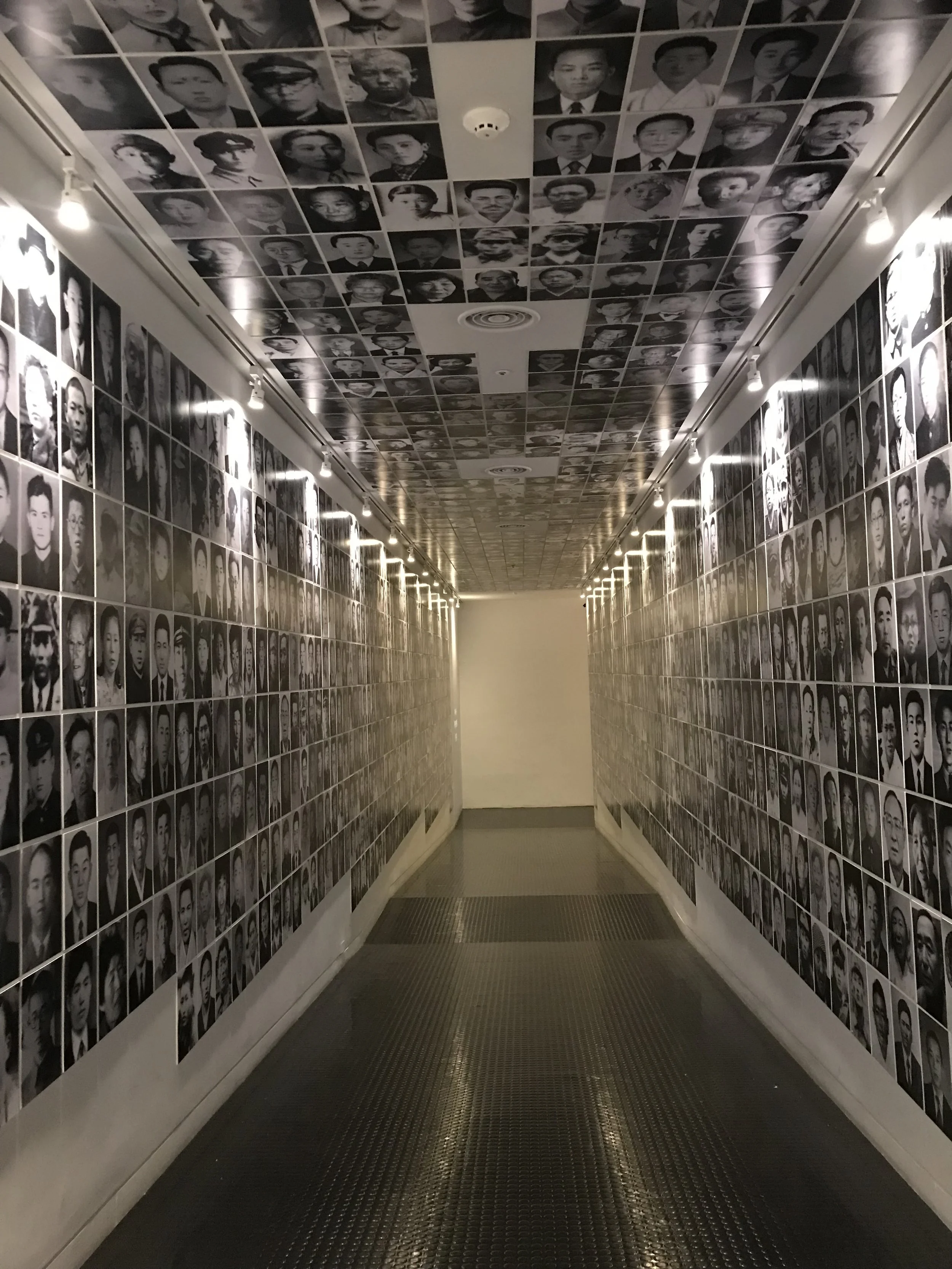
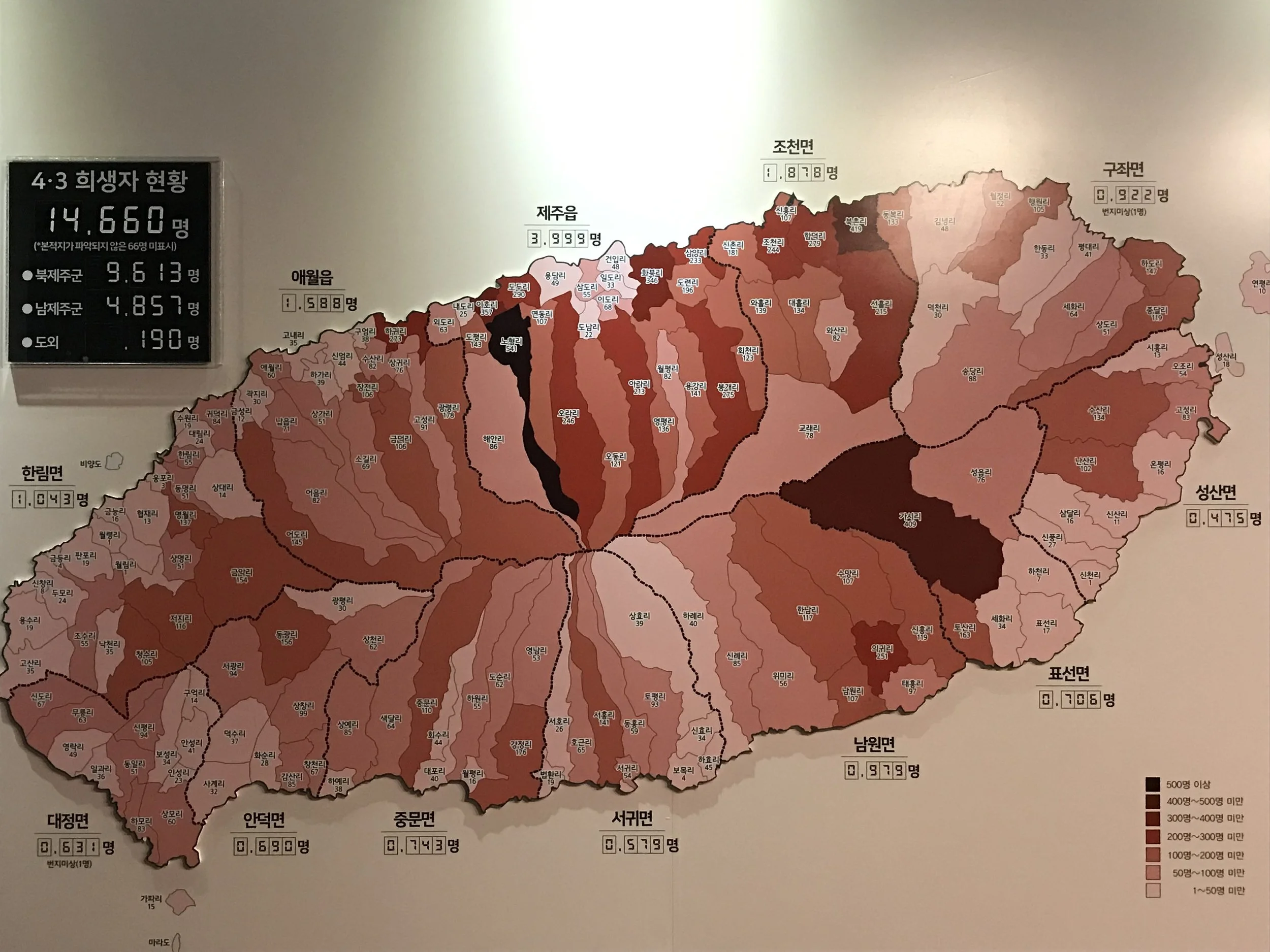
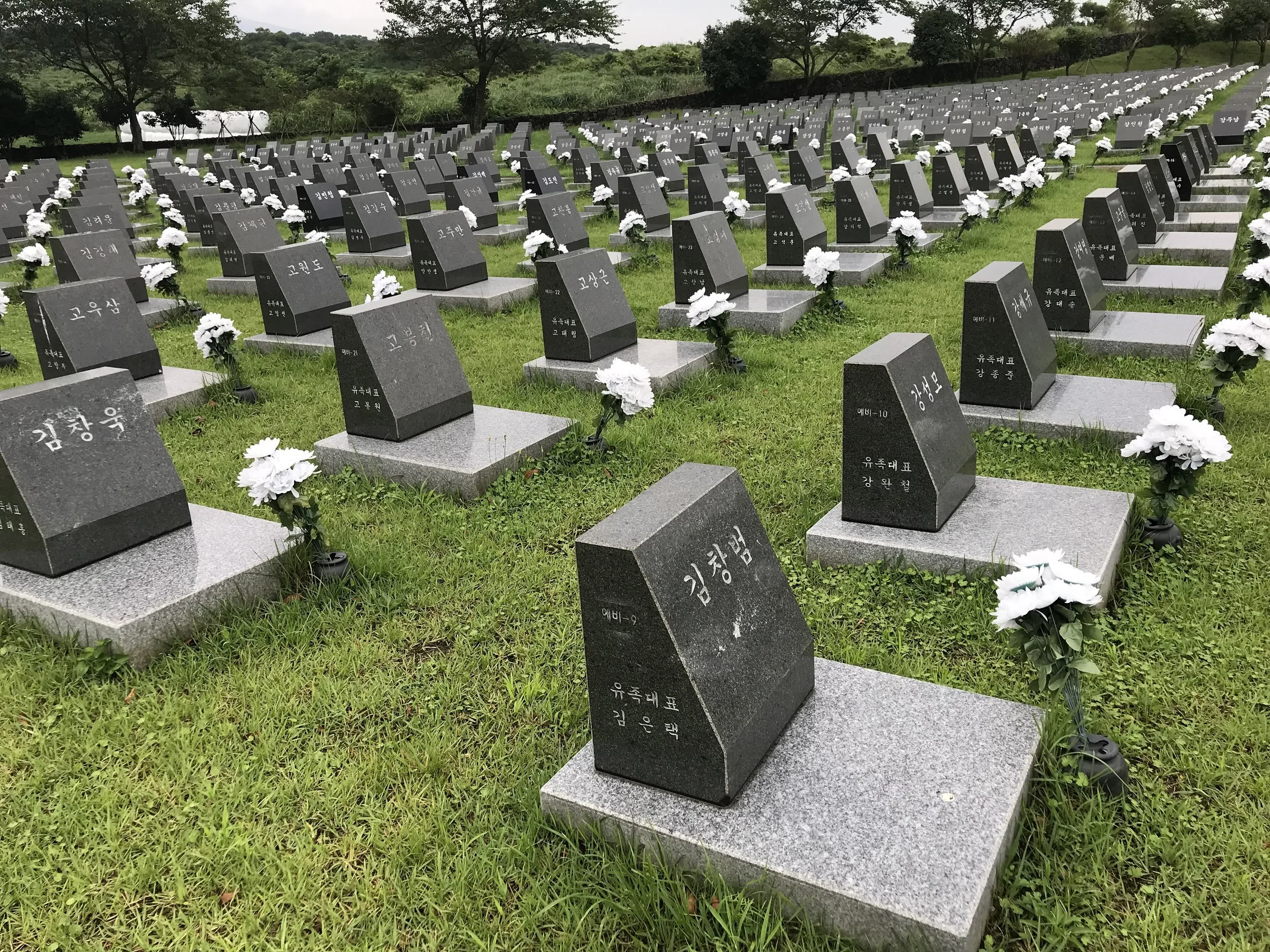
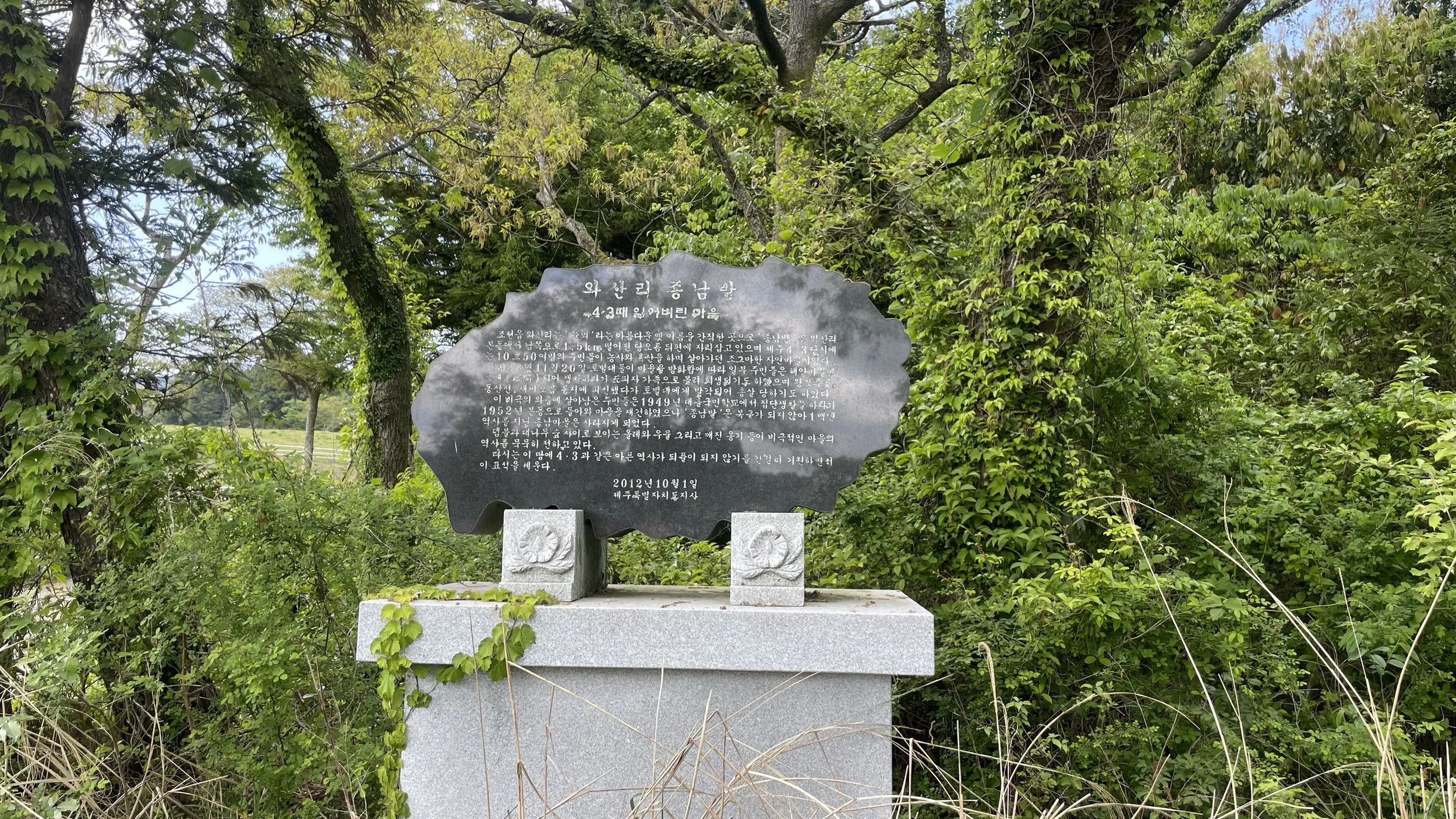
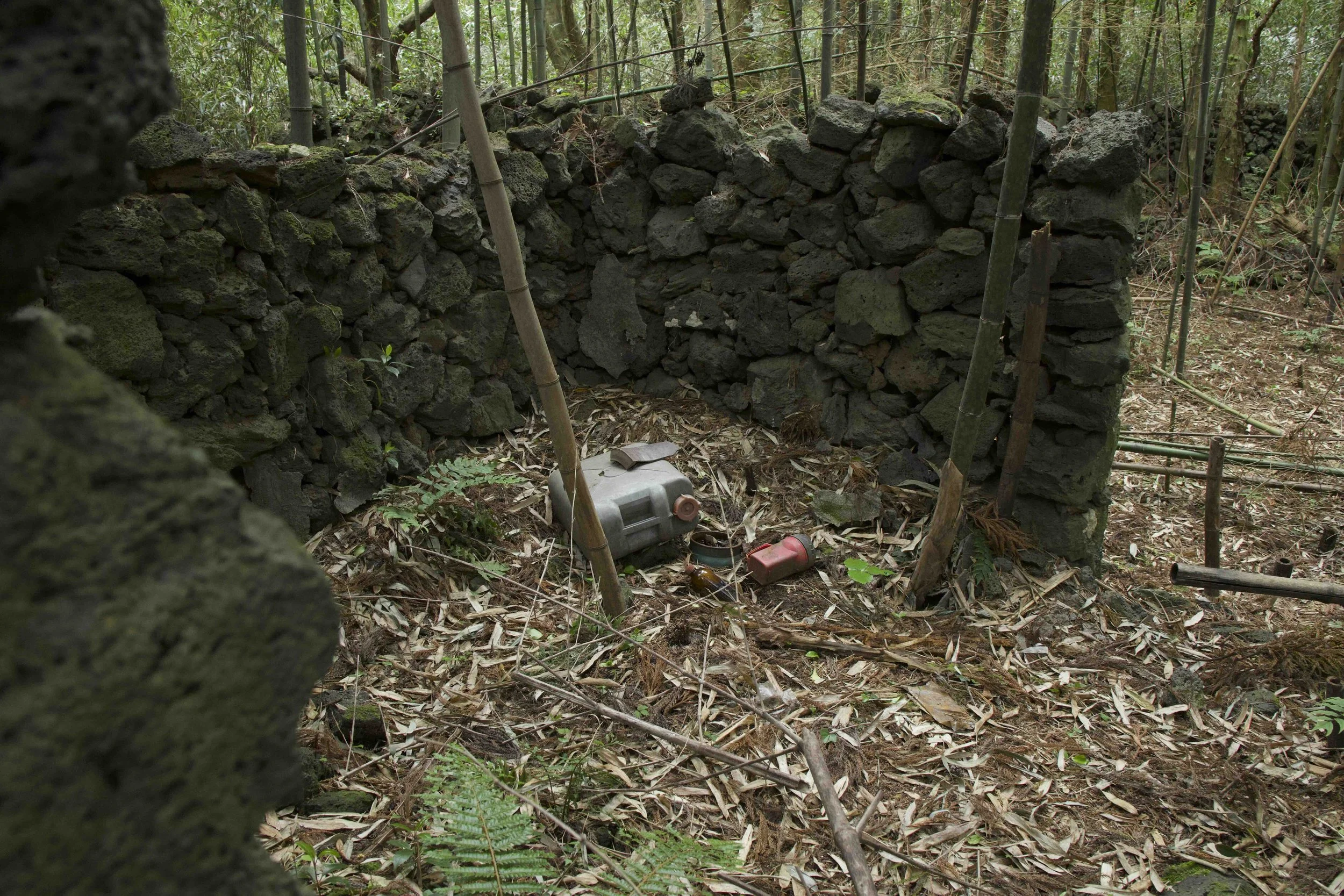
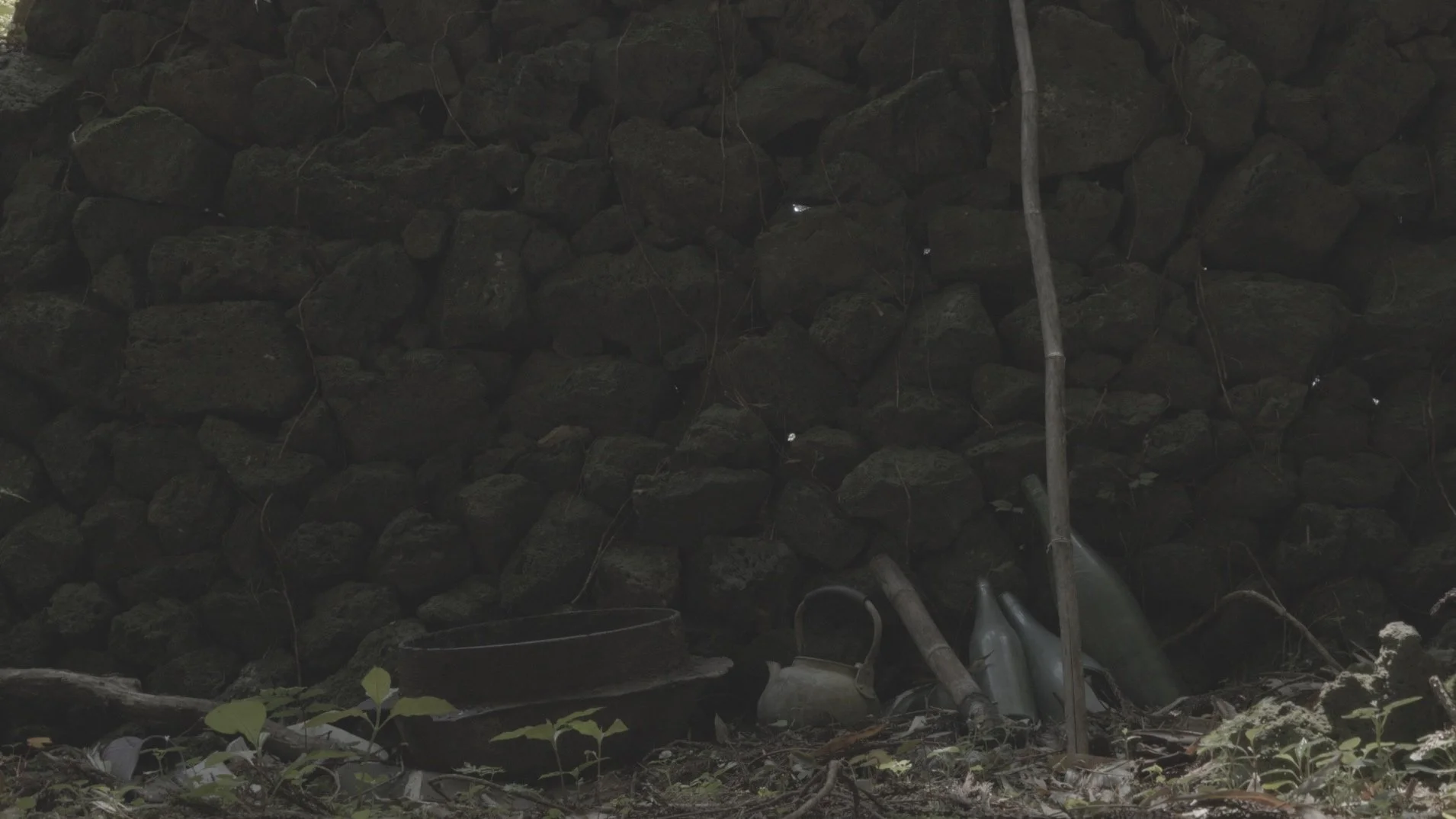
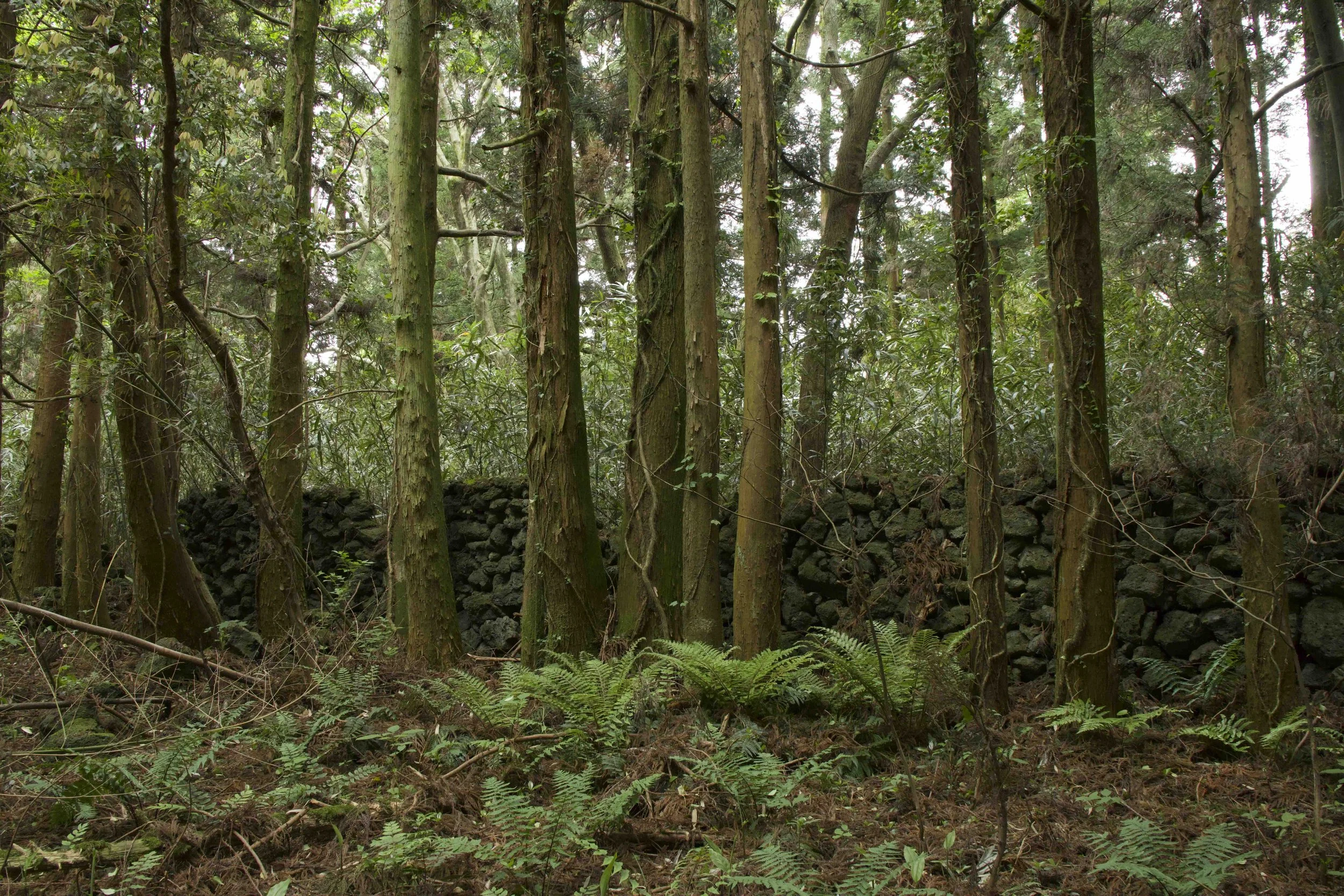
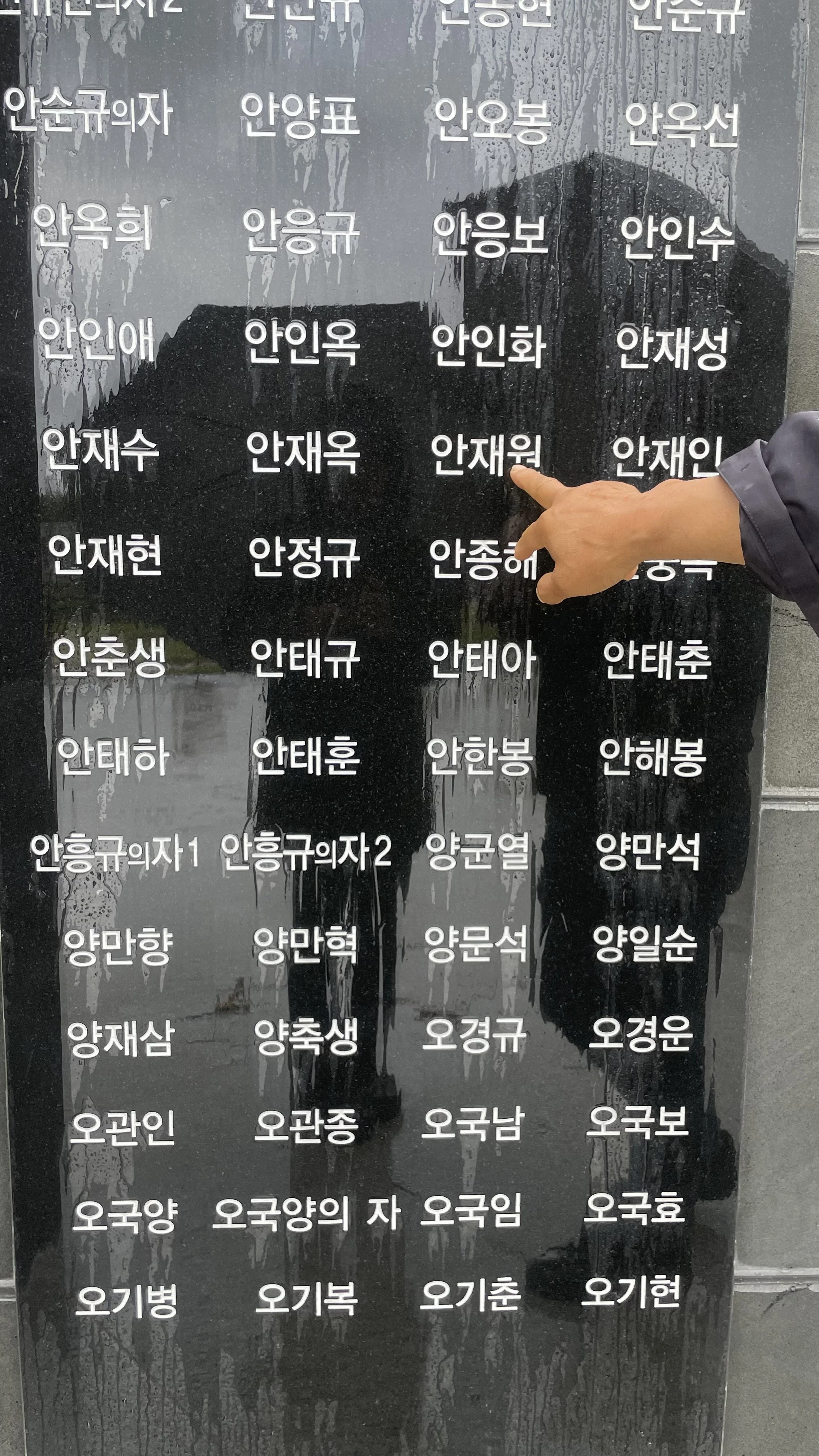
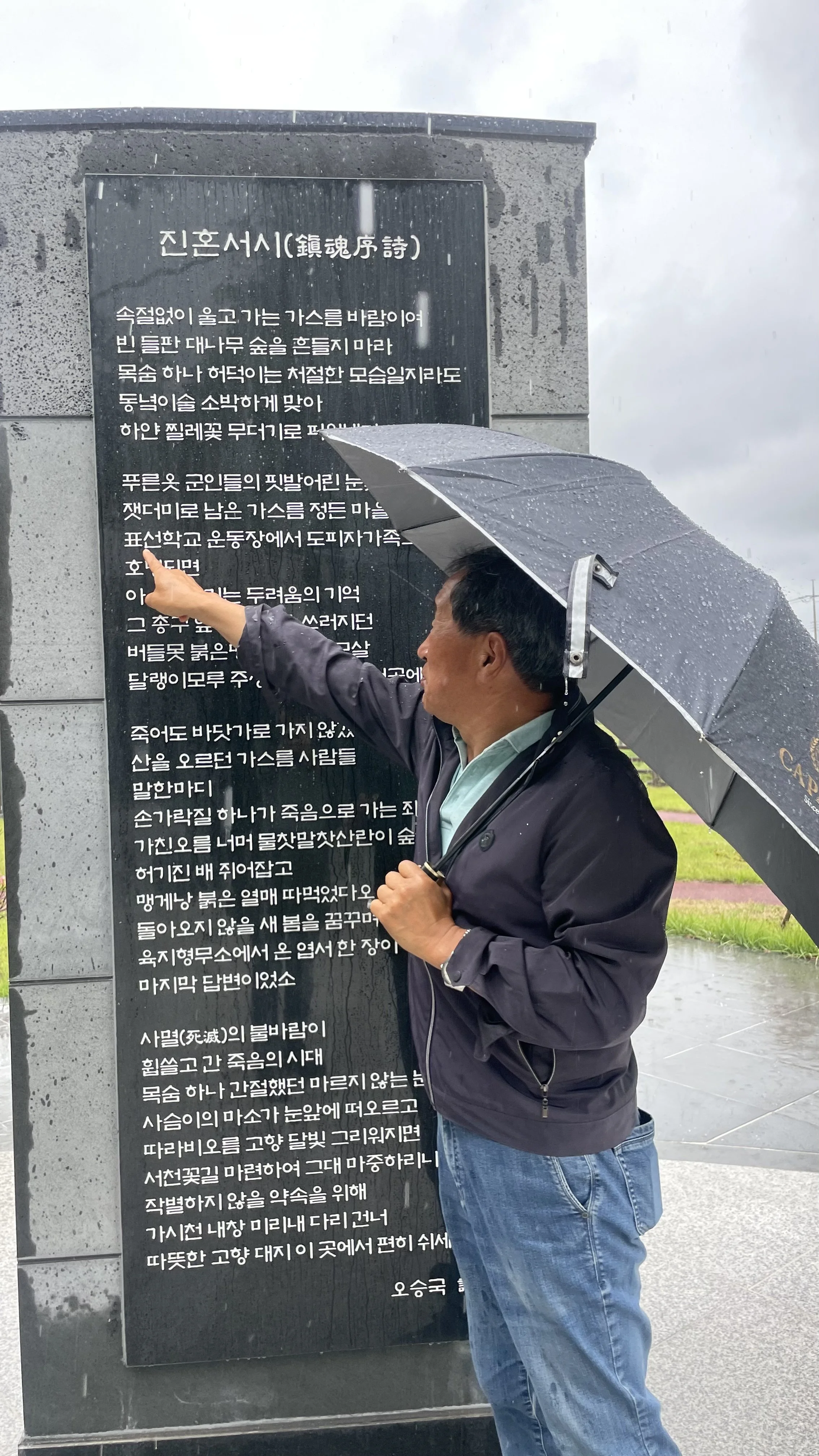
The Lost Villages are commemorative sites on Jeju Island, Korea, that serve as historical records of state violence during the Jeju April 3 Incident (Jeju 4.3) from 1947 to 1954. These villages lay along the mid-mountain range and were destroyed by the government’s scorched-earth operation. Their residents were displaced and never returned. Today, their presence is visible only through memorial markers. Many sites have become part of new towns or been paved, and some remain unoccupied in deep forest, with stone walls marking where homes once stood.
Walking. Sharing. Offering. Reading. Watching.
My work has long been concerned with what persists beneath an erased surface, as in the yellow paint beneath the white paint in the Invisible Transformation Project. The Lost Village Project extends this concern to the landscape itself. What does this village remember? I am less interested in reconstructing what happened than in finding a present-tense way to stand, walk, and gather in places history has emptied out. Reflecting on Saidiya Hartman's concept of critical fabulation, storytelling as a means of entering historical trauma, I'm invested in ways to approach the archive "with and against" the violence it registers.
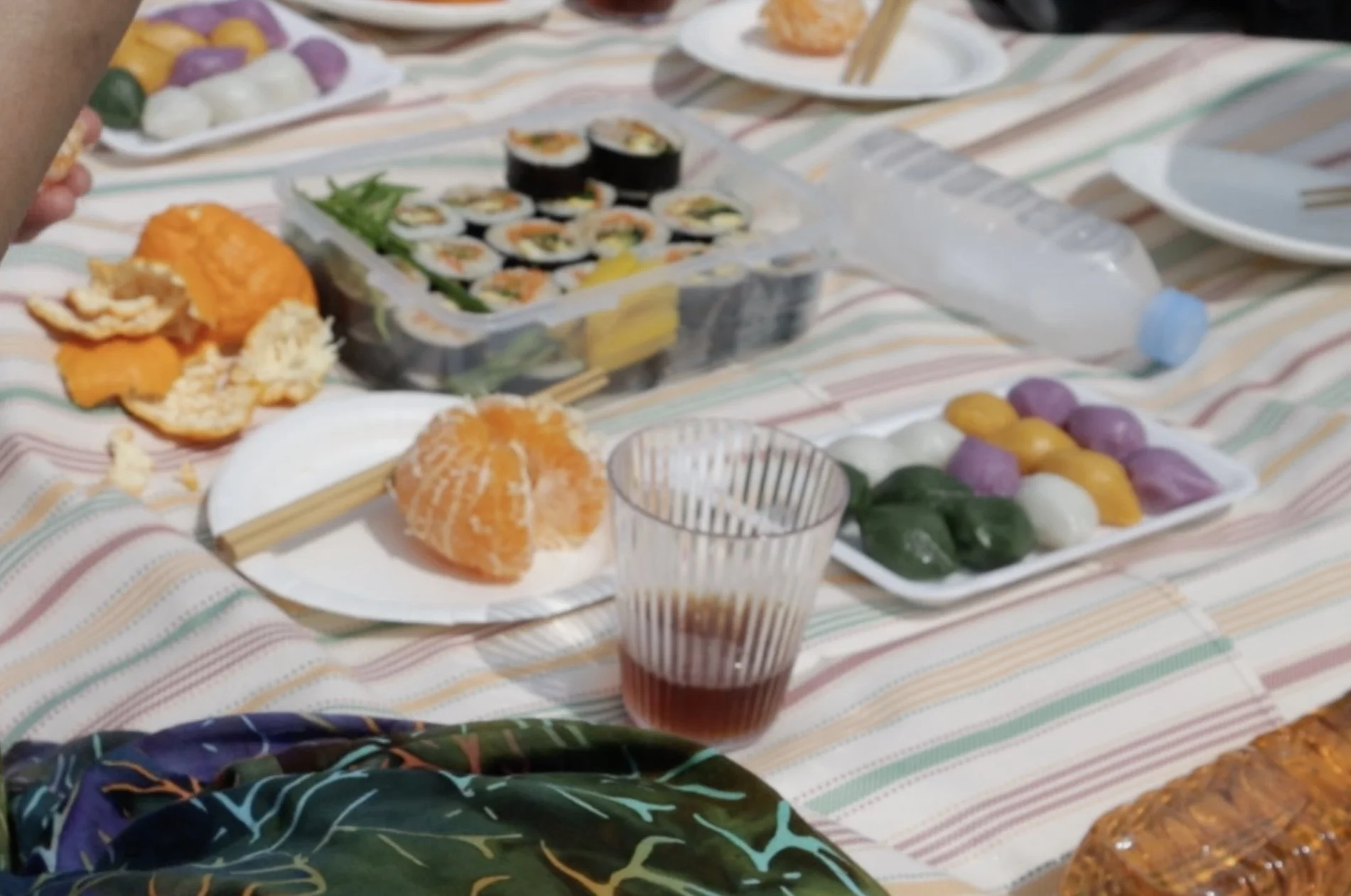
I’ve adapted various forms and formats as research methods for this project, such as gathering stories from archives (written and oral), walking, documenting, and hosting a picnic. This is a slow-process-based research project in which the visual works I’ve produced are not necessarily finished output but rather ever-growing studies of the villages and the memories they carry.
-
Published by Jeju 4.3 Research Institute, 2020
-
We Do Not Part by Han Kang
Convalescence by Han Kang (not specific to Jeju 4.3, but her descriptions of moments of healing resonated with me)
순이삼촌 by Hyun Ki-young/Sun-i Samch'on (Aunt Suni)
잃어버린 마을을 찾아서: 제주 4.3 유적지 기행
“Venus in Two Acts” by Saidiya Hartman
-
Jiseul (2012), dir. Meul O
My Name (2026), dir. Jeong Ji-yeong
Voices (2024), documentary, dir. Kim Ok-young
Soup and Ideology (2021), documentary, dir. Yang Yong-hi
Until Stones Speak (2022), documentary, dir. Kim Kyungman
-
Song Ki-Nam, Herbalist
Koh Seung-wook, Artist, researcher, and archivist
Ahn Bong-Su, Director, Village Communities Laboratory (Gasi-Ri)
Kim Seong-nae, Professor Emeritus, Department of Religious Studies, Institute for the Study of Religion, Sogang University